
BENITO VILLAMARIN STADIUM
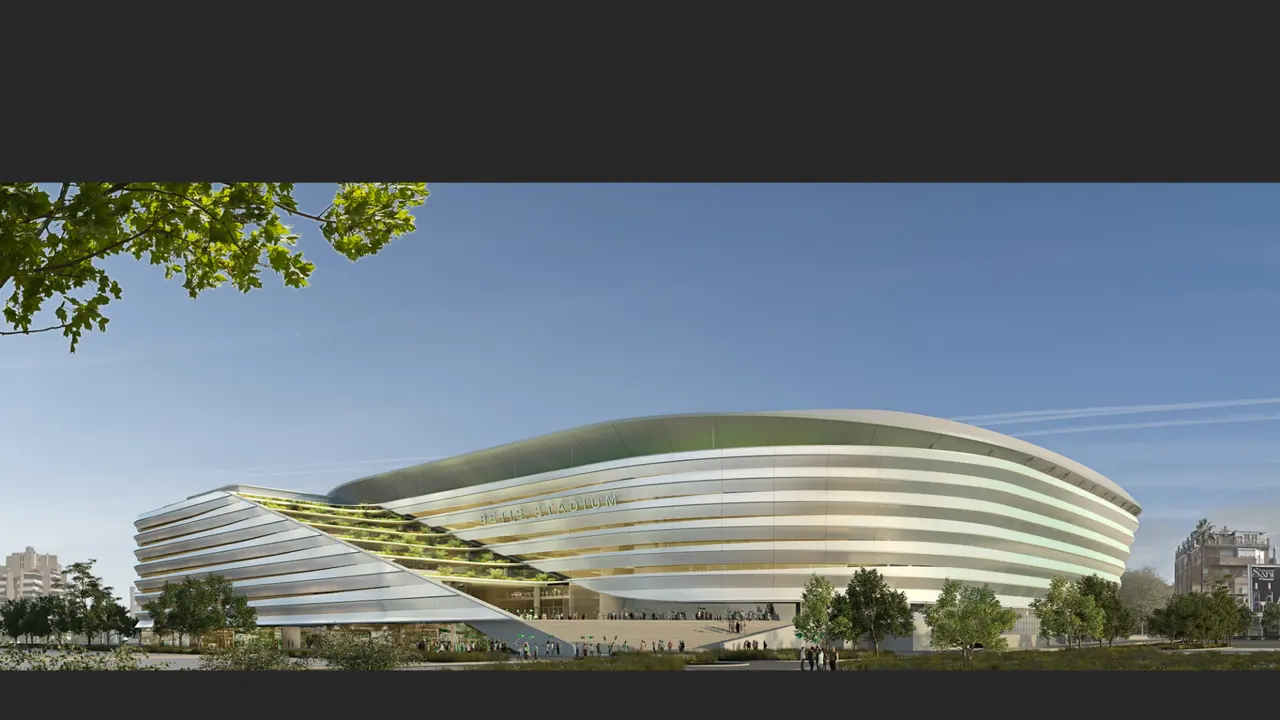
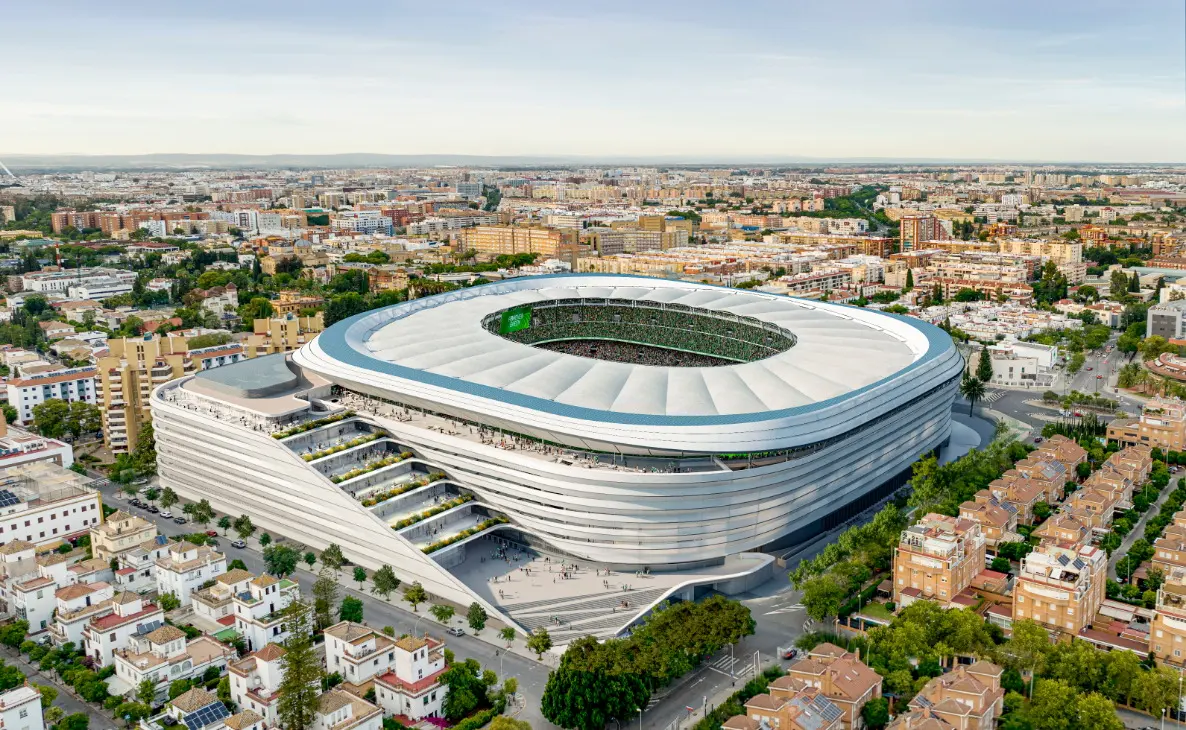
This stepped design allows for accessible green terraces and avoids creating blank façades, while respecting the maximum building heights along Padre García Tejero Avenue. From a functional standpoint, the new East Stand becomes the heart of the stadium, concentrating the main circulation systems, vertical connections, services, and premium seating. This intervention provides a significant increase in VIP and hospitality capacity, as well as thermally controlled spaces for year-round use.
The project updates the stadium to meet UEFA and FIFA requirements, improving accessibility, safety, and spectator experience. Environmental and technological criteria are central to the proposal. The project reuses three quarters of the existing stadium, minimizing demolition and reducing environmental impact, while upgrading obsolete installations and infrastructure.
The new roof and lightweight double-skin façade improve thermal comfort, protect spectators from rain and sun, and offer a contemporary architectural expression capable of transforming the stadium into a true urban landmark, both by day and night. Ultimately, the project delivers not only a modernized stadium but a comprehensive urban intervention: an inclusive, technologically advanced, and commercially vibrant facility that strengthens the identity of Real Betis Balompié and positions the Benito Villamarín Stadium as one of Europe’s most attractive football venues.
Credits

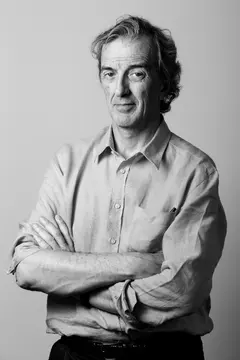
RAFAEL DE LAHOZ
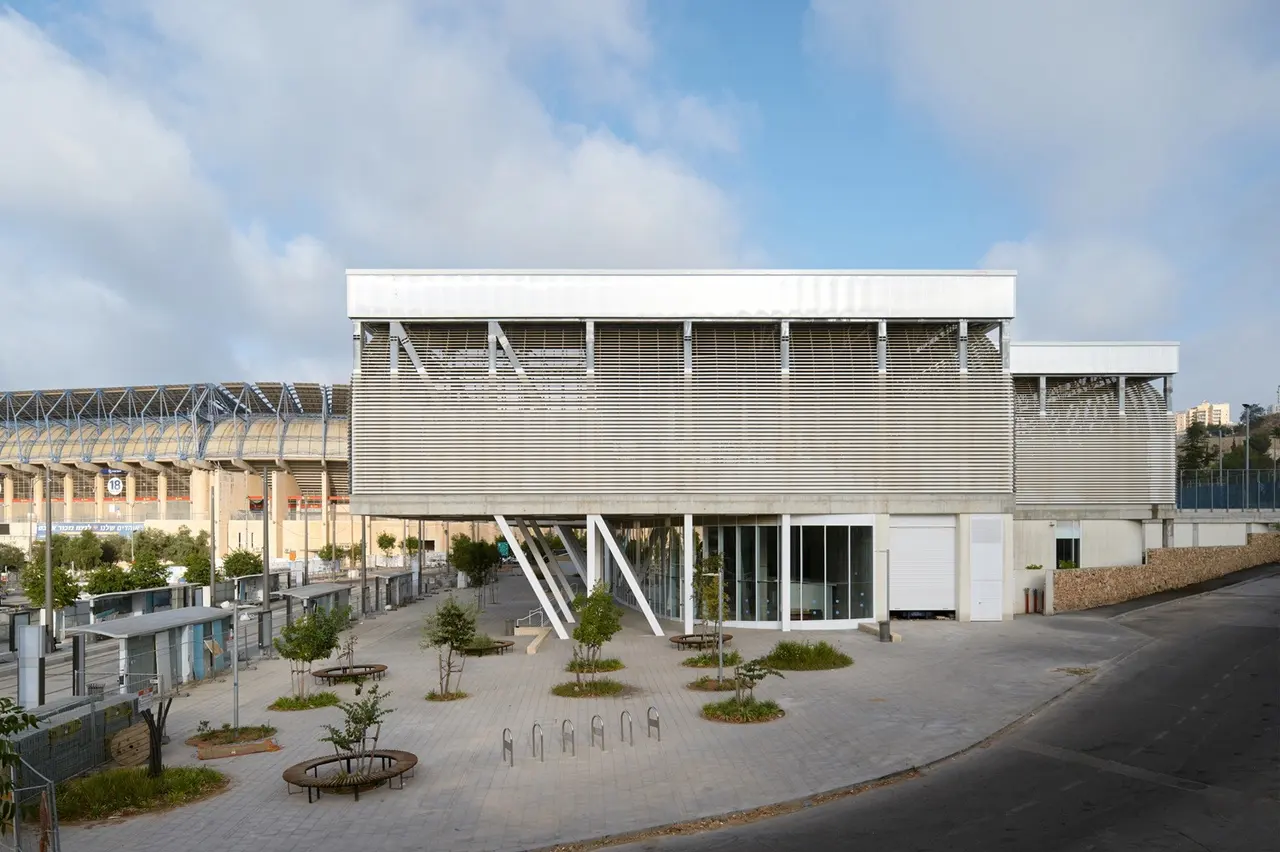
RAFAEL DE LA-HOZ (Córdoba, Spain) Architect, School of Architecture of Madrid (ETSAM–UPM), 1981 MBA, Polytechnic University of Madrid, 1988 His most renowned works include large-scale projects such as Telefónica’s District C (2008) and the Rey Juan Carlos University Hospital (2012), as well as smaller-scale projects such as the Rafael del Pino Foundation (2005) and the Pedroches Pavilion (2021). His most widely recognized heritage interventions include the Daoiz y Velarde Cultural Center (2015) in Madrid, the Antonio Gala Foundation at the Corpus Christi Convent (2002) in Córdoba, and the Palace of the Counts of Villagonzalo (2021) in Madrid. He has taught at the Universitat Internacional de Catalunya (UIC Barcelona) and the Pontifical University of Salamanca (UPSA), and has served as a visiting professor at ETH Zurich (Swiss Federal Institute of Technology). He was awarded the Medal of the Superior Council of the Associations of Architects of Spain (CSCAE) in 2017. His work has been widely published in both national and international media.


Share your best project with our design community
Register for free and share your projects with the global design community.
Publish your projectContact RAFAEL DE LAHOZ
Your message is sent to RAFAEL DE LAHOZ without revealing their email address.
Thank you, your message has been sent.
Did you contribute to this project?
Submit your information to request inclusion in the project credits.
Thank you, your request has been sent.